
Cable harness protection matched to the environment and specification
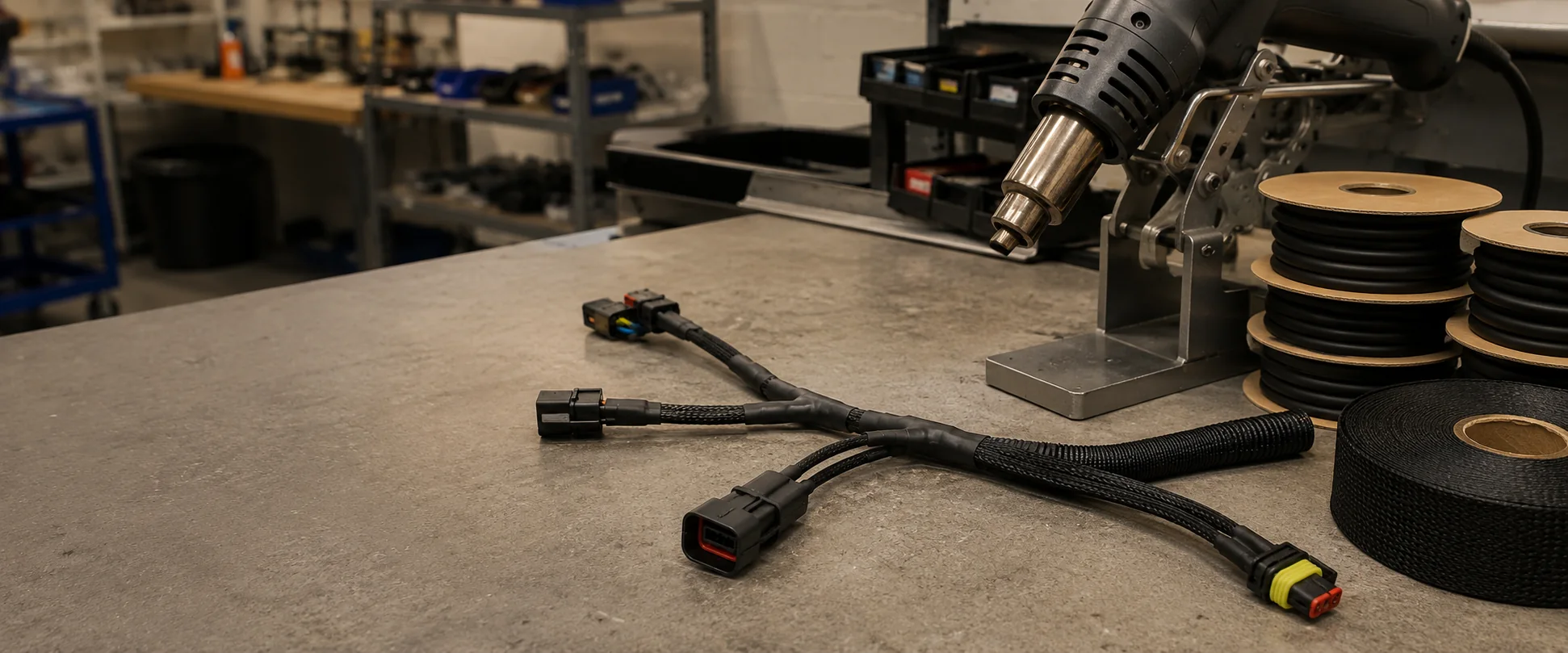
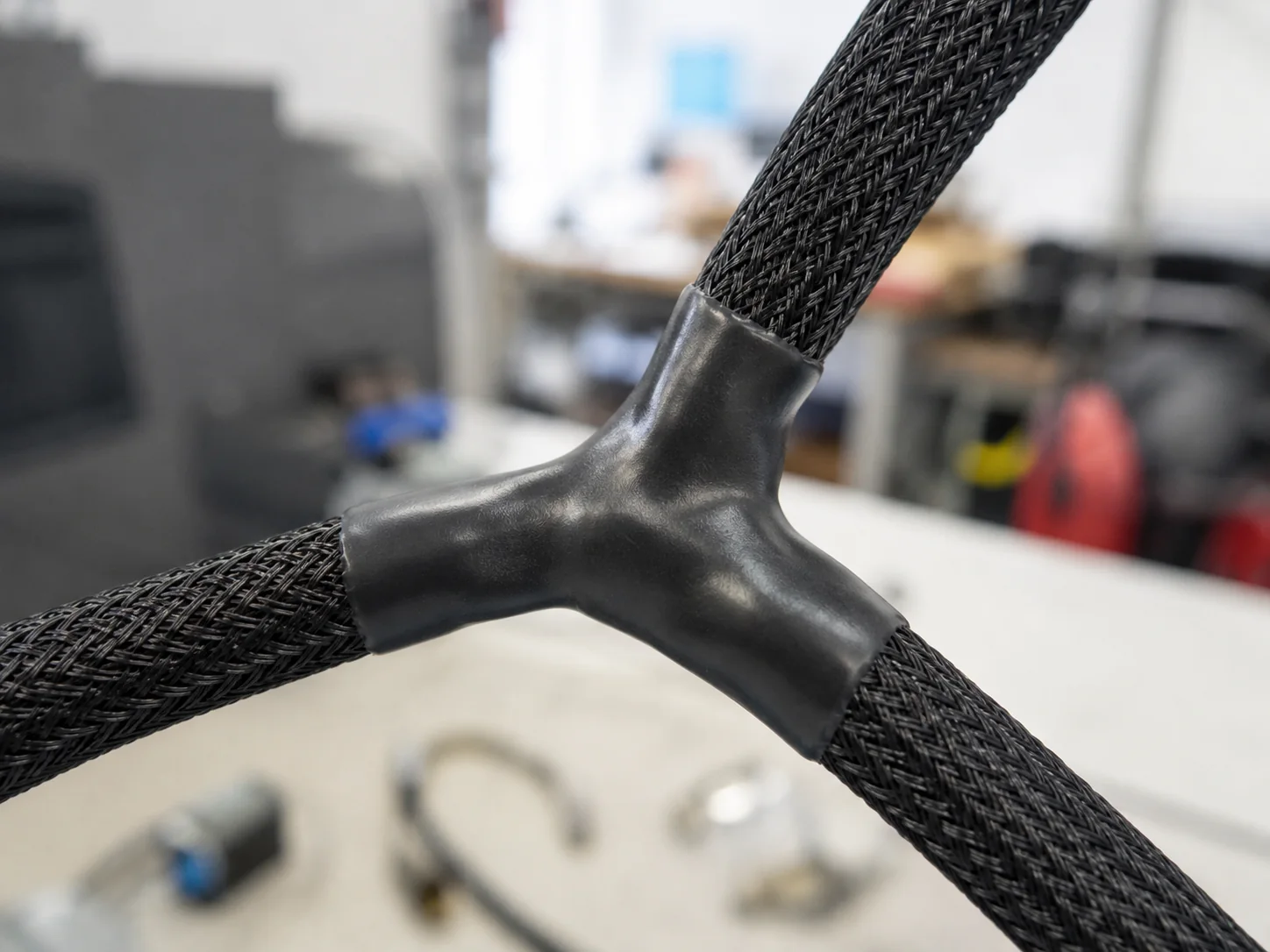
Cable harness protection is the covering applied on the outside of the assembly — or of the part of the assembly that needs it — so that it withstands where it will work. It is not filling an area with resin: it is covering it. And it is almost never necessary to protect a whole assembly, but a specific stretch: the exit of a connector, the branch point where the legs separate, the piece that rubs against a structure. What goes there is decided by the environment your project declares, not by a catalogue.
What it involves
Which areas of the cabling need cable harness protection
Protecting is not the same as grouping or potting. Grouping orders the assembly; potting embeds an area in resin; protecting puts a covering over it that absorbs what the assembly should not receive directly. Depending on the area and the requirement, that covering can be braided sleeving, a sleeve, corrugated tube, tubing, spiral wrap, taping or a heat-shrink sleeve. Cable harness protection is not decided by habit: it is decided by where it rubs, where it bends, what is around it and what has to remain accessible after assembly.
Process control
Verifiable criteria of cable harness protection
The acceptance criterion for cable harness protection is agreed in writing before the order and depends on the material and the assigned manufacturer. On receipt only what was specified is checked: this list does not describe what we offer, but what has to be settled with you before the batch is launched.
How this process is coordinated
How cable harness protection is defined
We start from the real working environment, not from a closed catalogue of finishes. These four steps prevent a covering from being decided by habit and then not fitting in the equipment.
You describe the exposure
What the assembly is exposed to, with what intensity and for how long it has to last according to your project.
We agree material and method
We review the requirement and consult the network on which covering fits, with its implication on lead time and cost.
Protected sample
You validate finish, geometry and fit on your equipment before it is applied to a series.
Series with fixed criterion
The approved configuration is documented to keep the same finish in later orders.
How it is decided
What defines cable harness protection
Four questions that define cable harness protection before choosing material. The order matters: first the area, then the requirement.
Which area has to be protected
A specific stretch, a branch, the exit of a connector or the complete assembly. It is almost never all of it.
What it has to be protected from
Rubbing against structure, repeated bending, contact during assembly or what your project’s environment declares.
What geometry the assembly allows
Diameter, bend radius, number of legs and free space in the equipment condition which covering fits.
How the result is accepted
Approved sample, finish of the ends and real fit in the equipment. That same criterion is repeated in the series.
Do you need to protect an assembly?
Tell us what it is exposed to.
With the working environment, the materials involved and a photo of the assembly we coordinate with the network the right covering and its cost.
What you can send us
Tell us what you need to buy
We reply within 1 working day.