
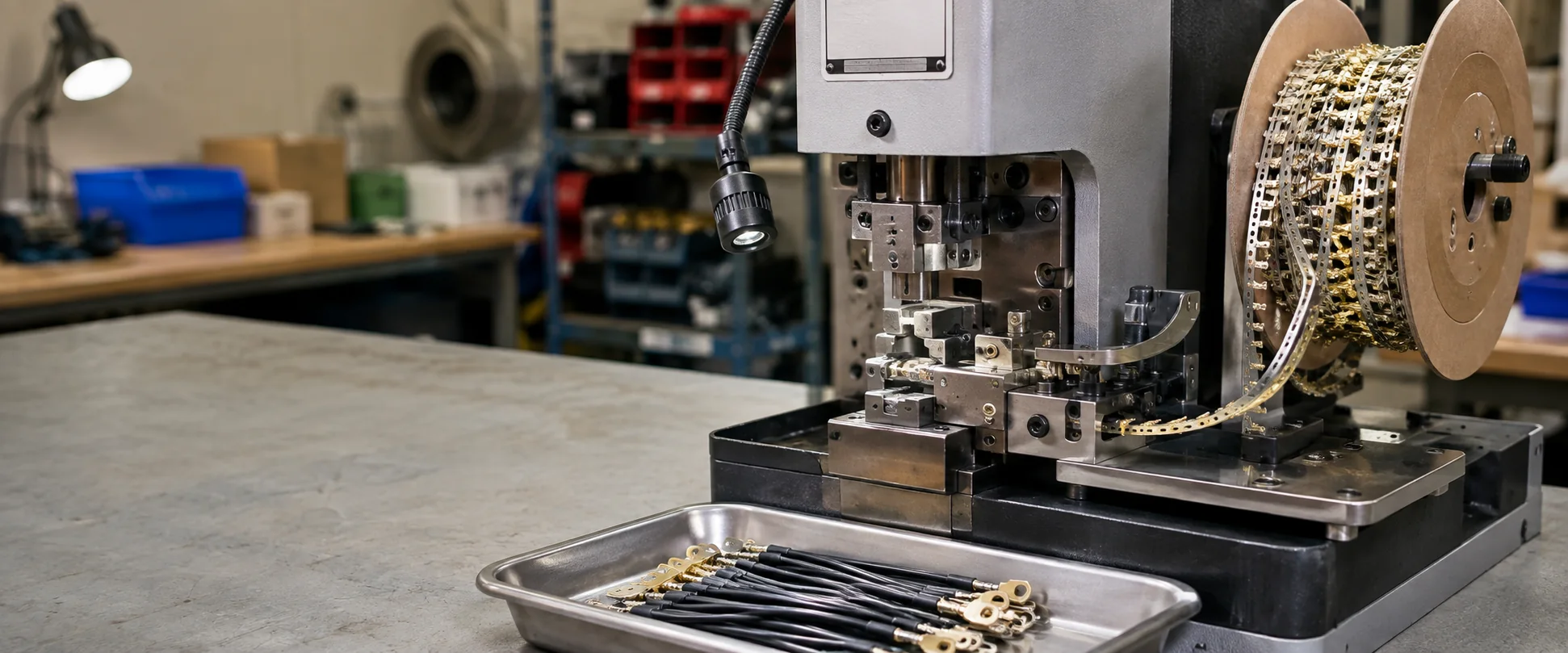
Wire crimping of terminals and contacts to specification
Wire crimping joins a prepared conductor to the terminal or contact defined by the project. Problems usually appear in the combination of terminal, real conductor cross-section and tooling applied, rather than in the terminal on its own. We coordinate the process by requiring that combination to be the right one, not the available one, and we check the batch received before delivering it.
What it involves
What wire crimping of terminals includes
Wire crimping of terminals is the process of joining a prepared conductor mechanically and electrically to a terminal or a contact through controlled deformation of its crimp zone. The sector also uses terms such as terminal crimping or crimp termination, and all of them designate the same operation. What decides the result is the combination: a terminal within the cross-section range of the conductor, deformed with the tooling that corresponds to that part number. With the wrong tool the assembly can look correct and measure well for continuity, and still degrade with vibration and thermal cycles.
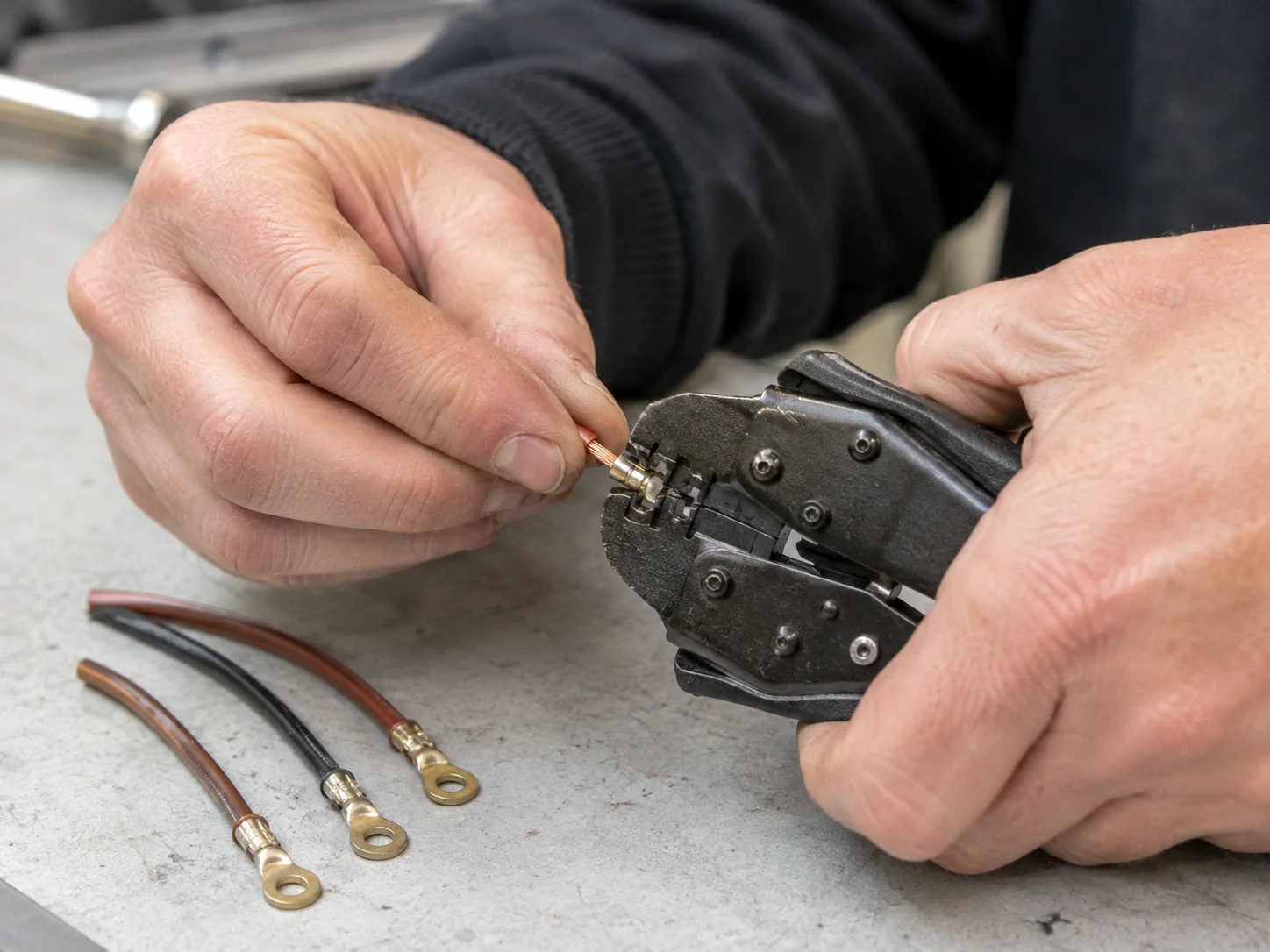
Process control
Verifiable points of terminals after wire crimping
The acceptance criterion is agreed in writing before the order and depends on the part number, the terminal chosen and the assigned manufacturer.
How this process is coordinated
How wire crimping of terminals is coordinated
The consistency between conductor, terminal and tooling is checked before accepting the order, not after.
We review the combination
We check that the terminal or contact chosen corresponds to the real cross-section of the conductor and that tooling exists for that part number.
We coordinate with the manufacturer
The assigned manufacturer confirms that it has the right tool for that specific part number before the order is accepted.
We validate a sample where appropriate
A crimped sample is validated before launching a quantity, with the possibility of reviewing it with you.
We check the batch received
Sampling verification of the batch according to the criterion agreed in the quote, before delivering it or moving on to assembly.
Where the failure originates
Where wire crimping of terminals fails
These four variables are settled in the quote; leaving them open is the usual cause of irregular terminations.
Prepared conductor
It arrives from cutting and stripping with a real cross-section and a specific strip length. A short strip leaves little conductor inside the terminal; a long one leaves copper exposed outside.
Terminal or contact
The terminal finishes a free end; the contact is crimped the same way but is afterwards housed in a connector. In both cases the part number must cover the cross-section range of the conductor.
Tooling for the part number
Each terminal part number has its own tool. A universal tool produces a deformation that does not correspond to the design of the terminal. The manufacturer that carries out the crimping supplies and applies it.
Control criterion
What is checked on the batch and to what extent. Without an agreed criterion, a deviating setting is detected when the whole batch has already been made.
Doubts about terminal and tooling?
Tell us the cross-section and terminal part number.
We check that the combination is consistent and, if it is not, we propose the correct terminal before you buy.
What you can send us
Tell us what you need to buy
We reply within 1 working day.