
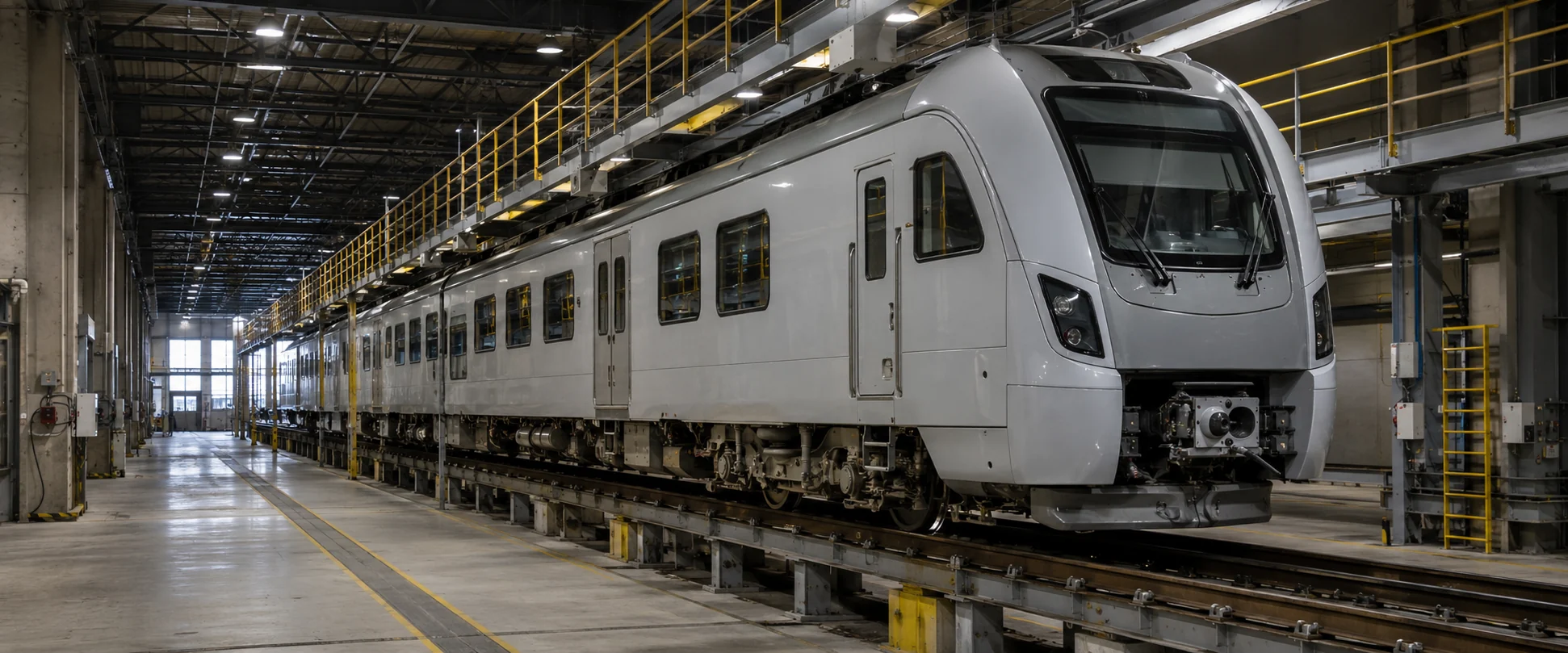
Railway cable assemblies for rolling stock and rail equipment
We work with manufacturers and integrators who need defined railway cable assemblies: assemblies, connectors and terminals for rolling stock and rail equipment, according to drawing, location, function and project requirements. This page is about the assembly and its documentation, not about cable by the metre.
What this industry needs
What railway cable assemblies demand
“Railway” does not by itself define the requirement for the cabling. The location of the assembly, its function and the installation conditions change which cable, which protection and which evidence are needed. On top of that comes the time horizon: a piece of rail equipment can be in service for decades, and a change of component can affect a prior validation or approval; that is why the relevant differences must be documented and validated by the customer where appropriate.
Industry requirements
Before quoting railway cable assemblies
Each project can require different criteria and they are confirmed with your documentation before quoting. If it defines requirements derived from EN 50343 —rules for installing cabling in rolling stock— or other applicable railway specifications, they are carried into the definition of the assembly and the selection of the manufacturer.
Where we step in
Where our railway cable assemblies come in
Our role is supply and coordination: the specification and its validation are always defined by the customer, and the manufacturer makes the assembly and carries out the agreed checks.
On-board equipment and subsystems
Assemblies, connectors and terminals for equipment and subsystems installed on rolling stock, according to the specification of the manufacturer or integrator.
Equipment cabinets and modules
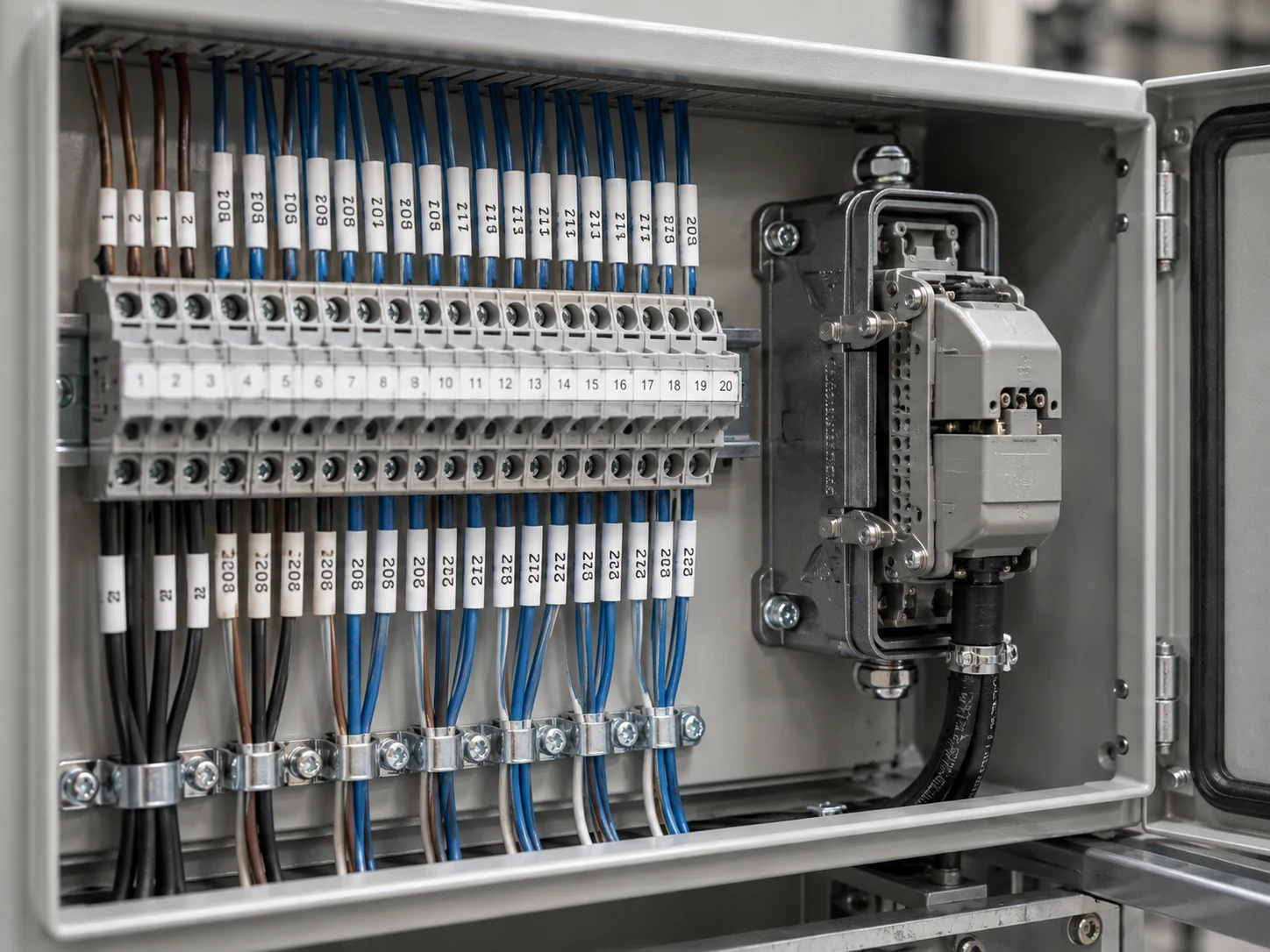
Interconnection inside cabinets, electrical enclosures or equipment modules, according to drawing, interfaces and project requirements.
Equipment in railway installations
Assemblies for equipment, modules and cabinets integrated into railway installations, always at the level of equipment defined by the customer.
Replacement and repeated series
Defined configurations that repeat over time, with advance notice if a part number enters obsolescence risk. Availability depends on the status of the manufacturer and of the part number at any given time.
What defines the assembly
What to define in railway cable assemblies
The location, the function of the assembly and the installation conditions determine which cable, which protection and which documentation the project needs. These three blocks are the ones worth closing before quoting.
Location and function
The location and the function of the assembly shape the requirements. Cabling inside a piece of equipment or a cabinet is not necessarily subject to the same conditions as cabling installed on the vehicle or in an exposed area.
Cable, protection and materials
Cable type, cross-section, protection, identification and materials must match the project specification. When there are fire-behaviour requirements, the evidence required for the materials concerned must also be defined.
Documentation and manufacturer
Traceability, certificates, reports and quality-system requirements must be defined before quoting. We check these needs with manufacturers able to make the assembly and provide the documentation required.
How we work for this industry
How we coordinate railway cable assemblies
The first step is to know exactly what the project requires, before committing to anything.
You pass us the requirement
Which drawing, which location, which function and which railway or documentary requirements apply to your project, and what has to accompany each delivery.
We check with the network
We find out which manufacturers can really meet that requirement, with which materials and which documentation they can issue.
We confirm in writing
We set out in the quote what can be provided and what cannot, without taking any compliance for granted.
We supply with control
The manufacturer makes the assembly and carries out the agreed checks. Each delivery keeps the agreed traceability criterion and we warn of any change of part number or manufacturer. If a part number is no longer available, we compare potentially compatible alternatives: the relevant differences are documented and the customer validates the change before incorporating it where appropriate.
Does your railway project have defined requirements?
Which railway requirement applies to your project?
Tell us the drawing, the location and the railway or documentary requirements your project applies. We check with the network what can be covered and tell you in writing before you commit to anything.
What you can send us
Tell us what you need to buy
We reply in writing with what we have been able to confirm.