
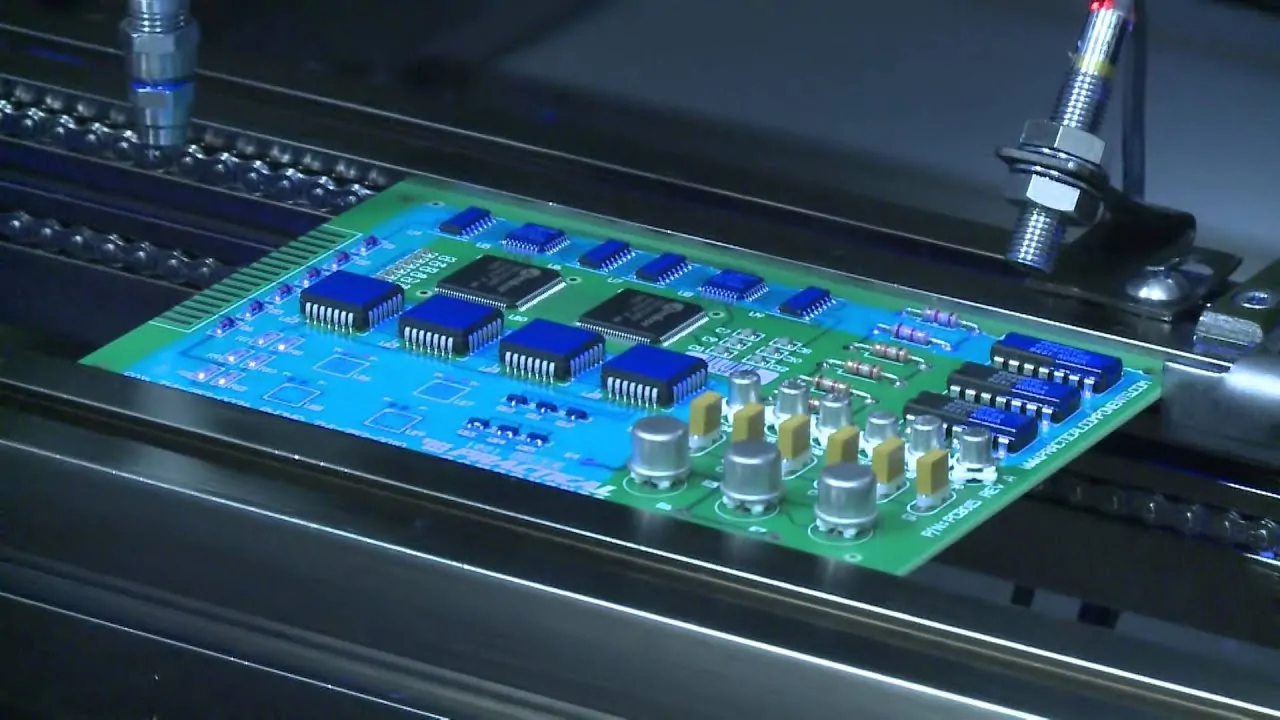
Conformal coating application on electronic boards to specification
Conformal coating application is the process by which an already assembled electronic board receives a thin film that follows the contour of its components. What defines the process is not the material: it is how far the coating reaches, which areas it must not touch and with what criterion the result is accepted. This page explains how it is defined. The supply of already coated boards is handled as a service under conformal coating.
What it involves
What conformal coating application covers and what it does not
Unlike potting, which embeds the area in resin, conformal coating leaves the board recognisable and, depending on the material, repairable. It is applied on the assembled board, not on a bare board: the coating has to coexist with the components that are already soldered and with those that will be handled later. That is why conformal coating application always starts with the same two questions: which surface is covered and what has to stay intact.
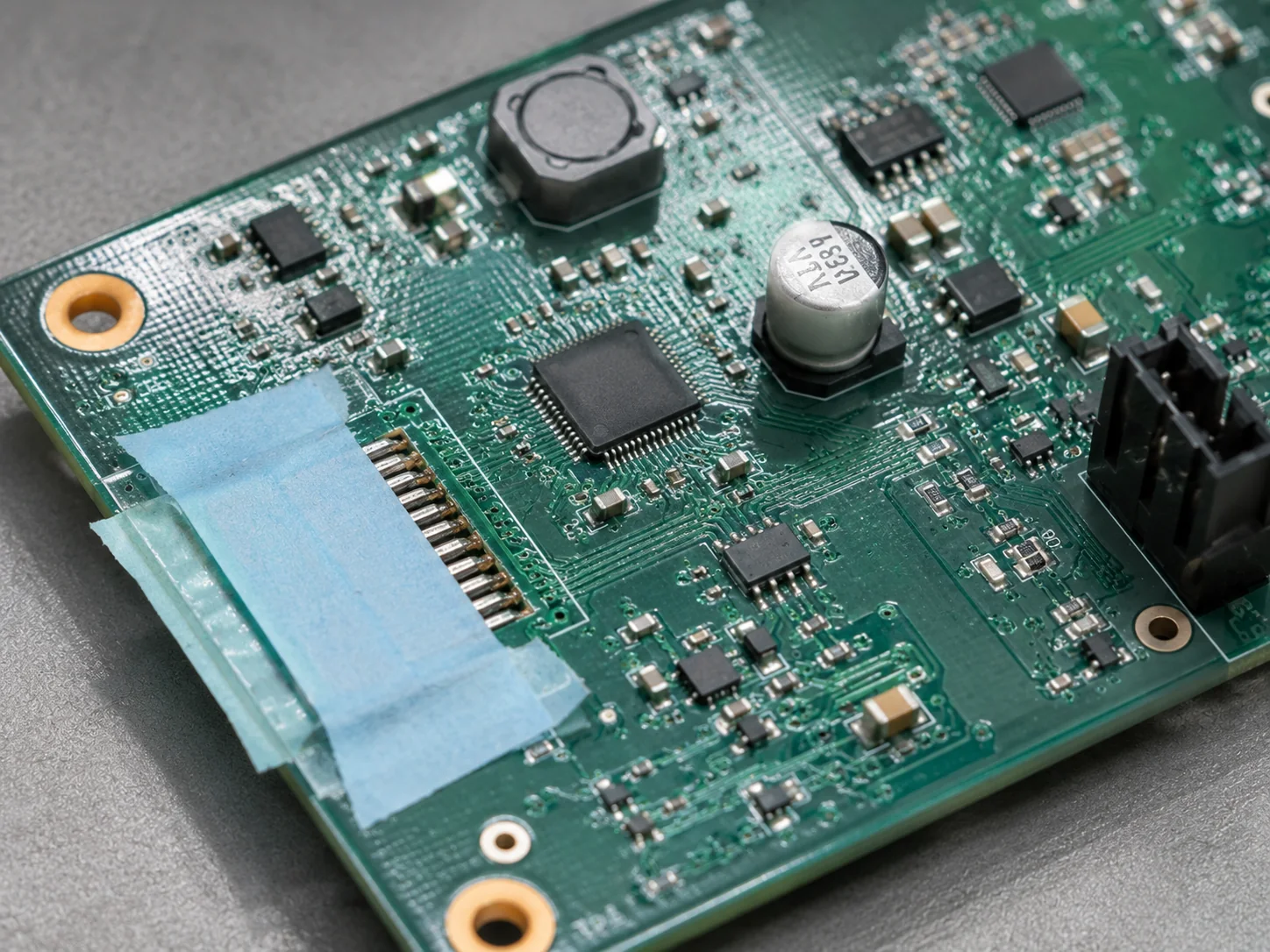
Process control
Verifiable criteria of conformal coating application
The acceptance criterion for conformal coating application is agreed in writing before the order and depends on the material and the assigned manufacturer. On receipt only what was specified is checked: this list does not describe what we offer, but what has to be settled with you before the batch is launched.
How this process is coordinated
How conformal coating application is defined
The masking is defined with your documentation before the board leaves for the manufacturer. Changing it afterwards costs considerably more than agreeing it beforehand.
You define areas
You state which areas are coated and which stay free, on a drawing or on a marked board.
We agree material and method
We review the requirement and coordinate with the network which material and which application method fit your board and your volume.
Coated sample
You validate coverage, masking limits and behaviour in your assembly or repair process.
Application to series
The approved criterion is kept in writing and maintained in later deliveries.
Critical points
What must be decided before conformal coating application
The most common mistake is not choosing the wrong material: it is not defining properly what must NOT be coated. These four decisions are the ones that condition conformal coating application.
Areas that must stay free
Connectors, contact surfaces, test points or adjustment areas, when your documentation excludes them. There is no universal list: the project sets it.
Expected exposure level
What the equipment will be subjected to in service according to what your project declares. The requirement comes from there, not from a catalogue of finishes.
Repairability after coating
If the board must be able to be touched up or repaired later, the material chosen conditions that possibility.
Acceptance criterion
How it is checked that the coverage reaches where it should, that the masking has been respected and that curing has finished. It is what is verified on the batch on receipt.
Does your board work outside a clean environment?
Ask us about the right coating.
Tell us the type of board, the areas that must stay free and the expected environment so that we can prepare a proposal.
What you can send us
Tell us what you need to buy
We reply within 1 working day.