
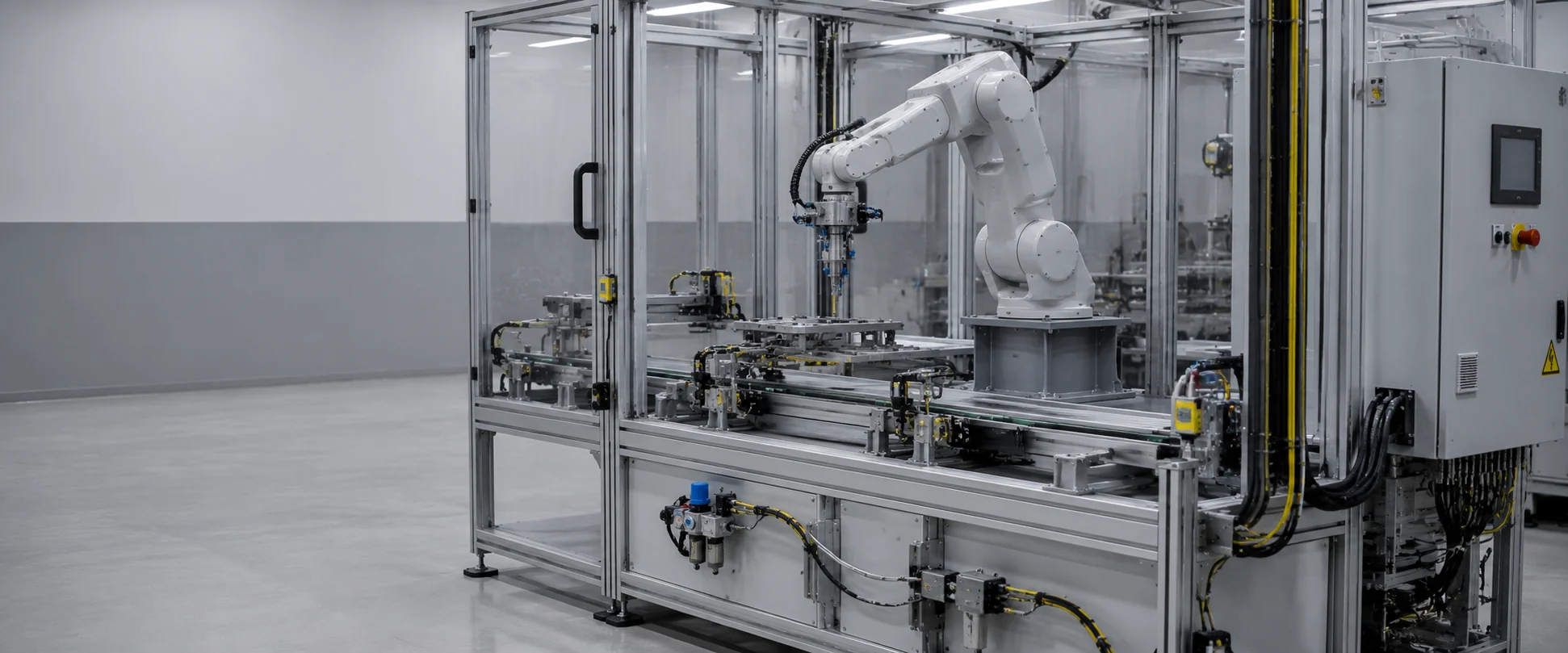
Cable assemblies for industrial automation, sensors and actuators
We supply automation cable assemblies to machinery manufacturers, automated-equipment makers and integrators: field connections defined by interface, function and conditions of use. The manufacturer makes the assembly; we compare alternatives and coordinate the supply.
What this industry needs
What makes automation cable assemblies different
Field connectivity must be defined like any other technical part of the equipment: it is not enough for the connector to have the right format if the coding, pin-out, function and cable do not match the interface. A poorly crimped contact or an unsealed connector in a wet area ends up being paid for when the assembly is already in the field.
Industry requirements
What to define in an automation cable assembly
Each project requires different criteria. We confirm them with your documentation before quoting, not after.
Common applications
Where automation cable assemblies come in
From the sensor in the field to the control periphery, each stretch has different requirements.
Sensors and actuators
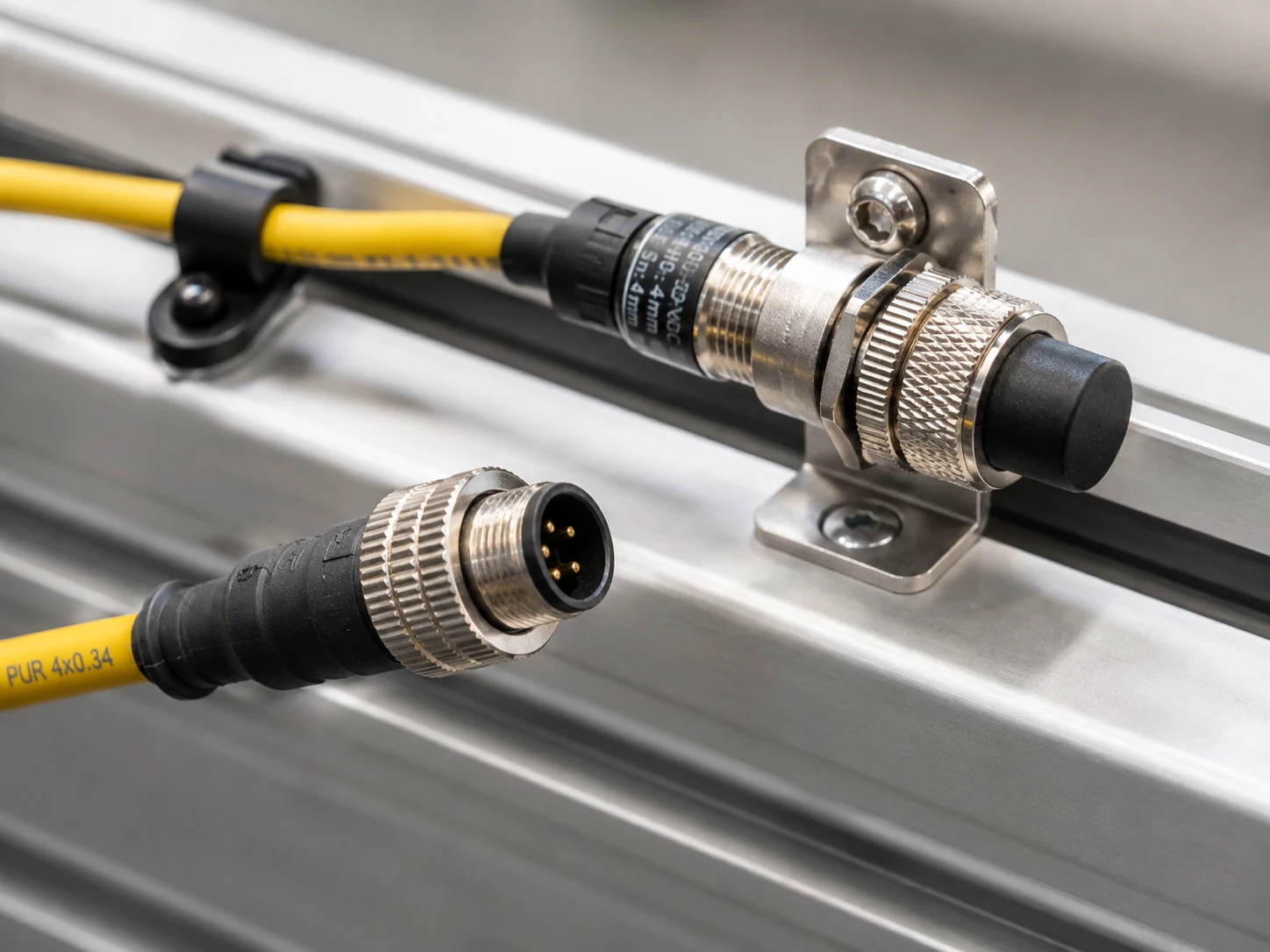
M12 and M8 connections for sensors, limit switches, solenoid valves and actuators, with the number of poles and the coding defined by the device interface.
Industrial communication
Assemblies for fieldbus and industrial networks. The interface, the cable performance, the shielding where applicable and the terminations are defined by the specification of the equipment and the system.
Connection between cabinet and field
Assemblies and connections between the control periphery and sensors, actuators or field modules according to the schematic defined by the customer.
Distributed I/O and field modules
Connection of distributed input and output modules and field periphery according to the architecture defined by the manufacturer or integrator.
Connection specification
What to define in an M8/M12 connection for industrial automation
“M12” is not a complete specification. The coding, number of poles, pin-out, electrical function and cable characteristics must match the interface defined for the equipment. The IEC specification for M12 connectors covers configurations from 2 to 17 contacts with different codings.
Signal and sensors
In connections to sensors, actuators or modules, the coding, number of poles, pin-out and cable characteristics must match the interface defined for the device.
Data and communication
In data or industrial communication connections, the interface, cable performance, shielding where applicable and terminations suited to the equipment and the system must be defined.
Field power supply and power
Voltage, current, number of conductors, cross-section and connection configuration must match the application defined by the responsible manufacturer or integrator.
How we work for this industry
How we coordinate automation cable assemblies
The better the interface is defined, the fewer variables remain open when the assembly reaches the field.
You pass us the specification
Which equipment must be connected, with which interface or protocol, with which coding and pin-out, and in which environment it works.
We compare alternatives
We compare cable, connector and termination alternatives that meet the interface and requirements defined for the project.
Manufacture of the assembly
The manufacturer makes the assembly; Justicia Marin coordinates its manufacturing and supply with the length, termination and identification agreed. The checks needed are agreed with that manufacturer.
Supply and replacement
The agreed configuration is used as a reference for later supplies for as long as the part numbers remain available. If one becomes obsolete, a potentially compatible alternative can be studied: the differences are compared and, where appropriate, the customer validates the change. Substitutions are not automatic.
Do you build machinery or integrate automation?
Tell us which interface has to be connected.
With the schematic or the list of equipment we compare manufacturers that can meet the defined interface. Cost, target lead time, availability and documentation are compared afterwards, among those that meet the technical requirements. If you want to prepare your enquiry, in how to request a quote we explain what information is needed.
What you can send us
Tell us what you need to buy
Initial commercial response with a technical contact.