
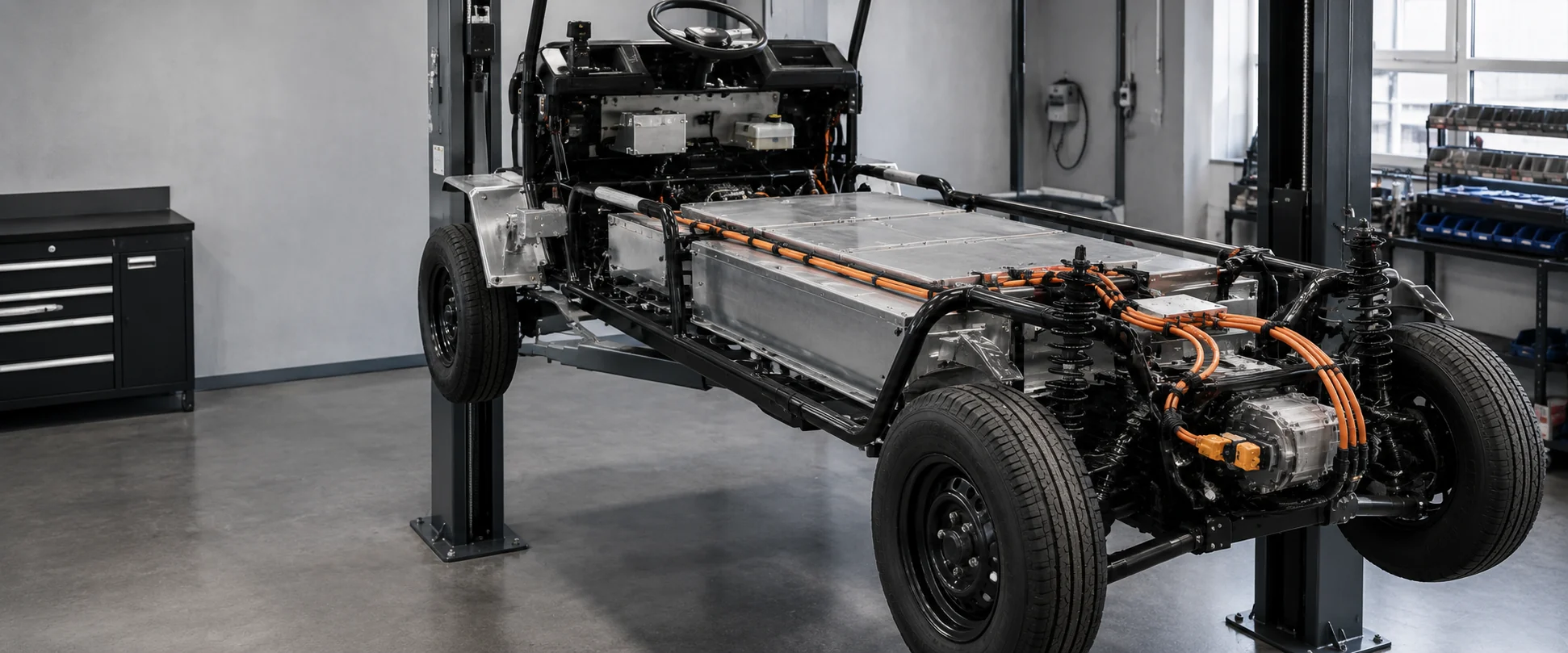
Power and high-voltage cable assemblies for electric mobility
High-voltage cable assemblies and power cabling for electric mobility require defining current, cross-section, terminal and interface according to the project. We supply custom cable assemblies, terminals and interconnection solutions for manufacturers and integrators when those decisions are a critical part of the specification.
Current and contact
Where current flows in power cable assemblies, the contact stops being a detail
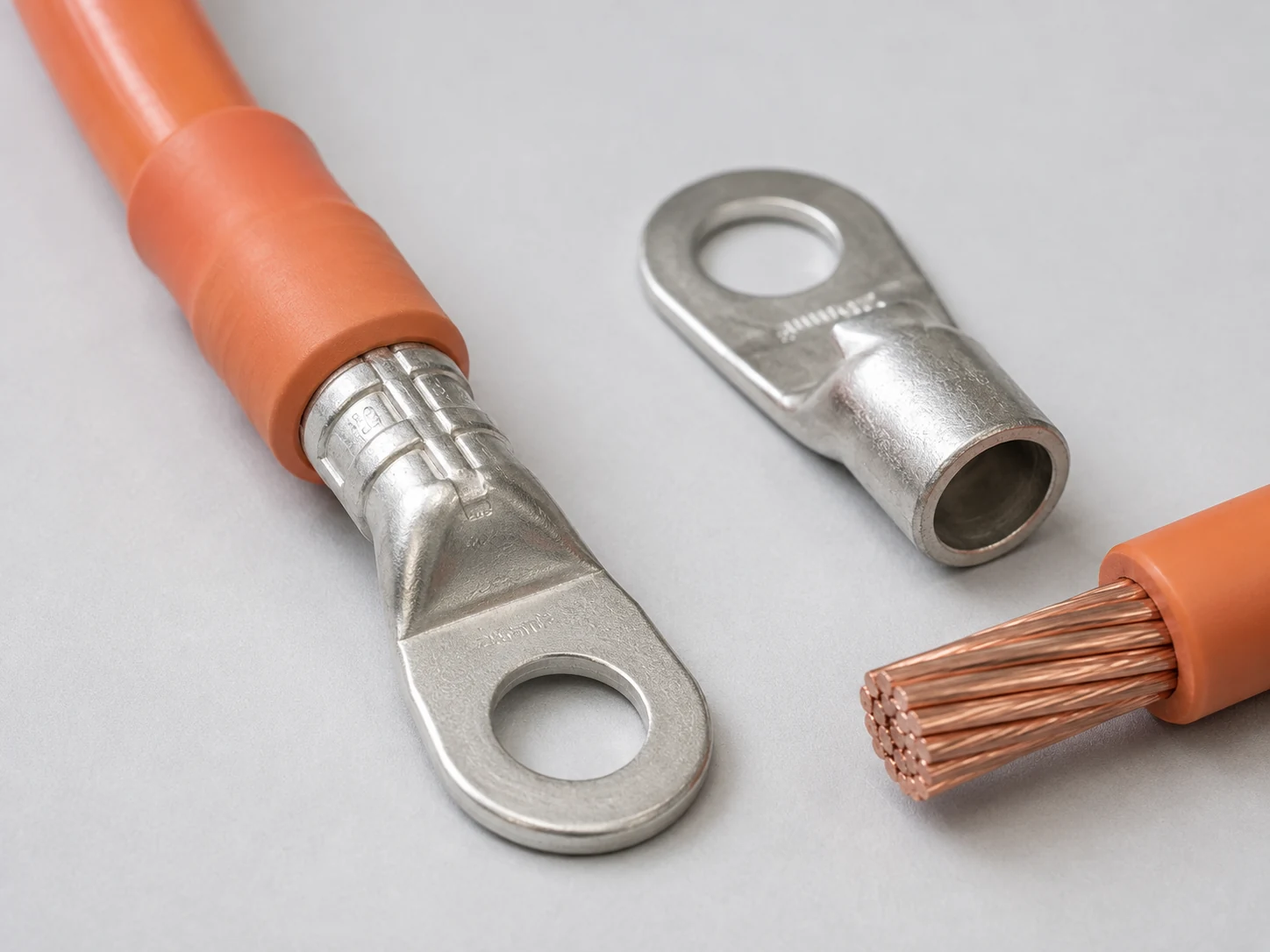
At low signal voltage, a mediocre crimp usually goes unnoticed. At high currents, that same crimp heats up, its resistance increases and the connection degrades progressively. That is why, when current becomes a relevant variable of the project, the cross-section of the conductor, the terminal, the contact and the protection stop being assembly details and form part of the specification.
Voltage and function
Voltage and function change high-voltage cable assemblies in electric mobility
There is no single valid cabling for the whole equipment. What has to be defined depends on where the energy flows and what function each circuit fulfils. As a technical reference, the ISO 19642 series of cables for road vehicles separates its parts according to the applicable voltage range.
Power
When current conditions the assembly, cross-section, conductor, terminal, contact, insulation and protection must be defined according to the requirements of the project.
Signal and control
Auxiliary, signal and control lines serve a different function from the power connections. Conductor, terminal, connector and protection are defined according to the interface and specification of the equipment.
Interface and evidence
The customer defines the interface and the acceptance criteria. The specialised manufacturer makes the assembly and carries out the agreed checks, and Justicia Marin coordinates the supply and the documentation required.
What we review before quoting
Conditions we review in high-voltage and power cable assemblies for electric mobility
Each project can require different criteria and they are confirmed with your documentation before quoting.
Common applications
Where power cable assemblies are used in electric mobility
Mainly in light vehicles, onboard equipment and battery systems defined by the customer. In electric mobility, the internal interconnection of a piece of equipment or vehicle is not equivalent to a charging cable for the end user.
Power connections
Terminals and connectors for the stretches where the main current of the system flows.
Battery systems
Connection between cells, modules and control electronics according to the architecture and interface defined by the customer.
Cabling for light electric vehicles
Connections for light electric vehicles and onboard auxiliary equipment.
Protection of the assembly
Sealing and protection where the assembly is exposed to humidity or splashing.
How we work in this industry
How we approach power cable assemblies for electric mobility
Sizing comes before price: a badly chosen terminal is not fixed by buying cheaper. The customer defines current, function, interface and acceptance criteria; Justicia Marin compares part numbers and manufacturers and coordinates the quote and supply; the selected manufacturer carries out the manufacturing and the agreed checks and issues the relevant documentation.
You give us the real conditions
Current, conductor cross-section, envisaged terminal type and working conditions of the assembly. In data to request a quote you will find the detail of what to send us.
We check the pair
We check that terminal, cross-section and crimping tooling are consistent with each other before quoting.
Sample and validation
When there are custom assemblies, you validate a sample on your system before the series.
Traceability of high-voltage cable assemblies in electric mobility
Deliveries with the level of documentation and traceability we have agreed in writing. If a part number is no longer available, we can study a potentially compatible alternative, and any relevant change must be validated by the customer before it is incorporated into the supply.
Do you work with high currents?
Tell us current, cross-section and envisaged terminal.
With those three data points we can check the consistency of the assembly and propose a suitable terminal and tooling before you buy.
What you can send us
Tell us what you need to buy
We reply within 1 working day.