
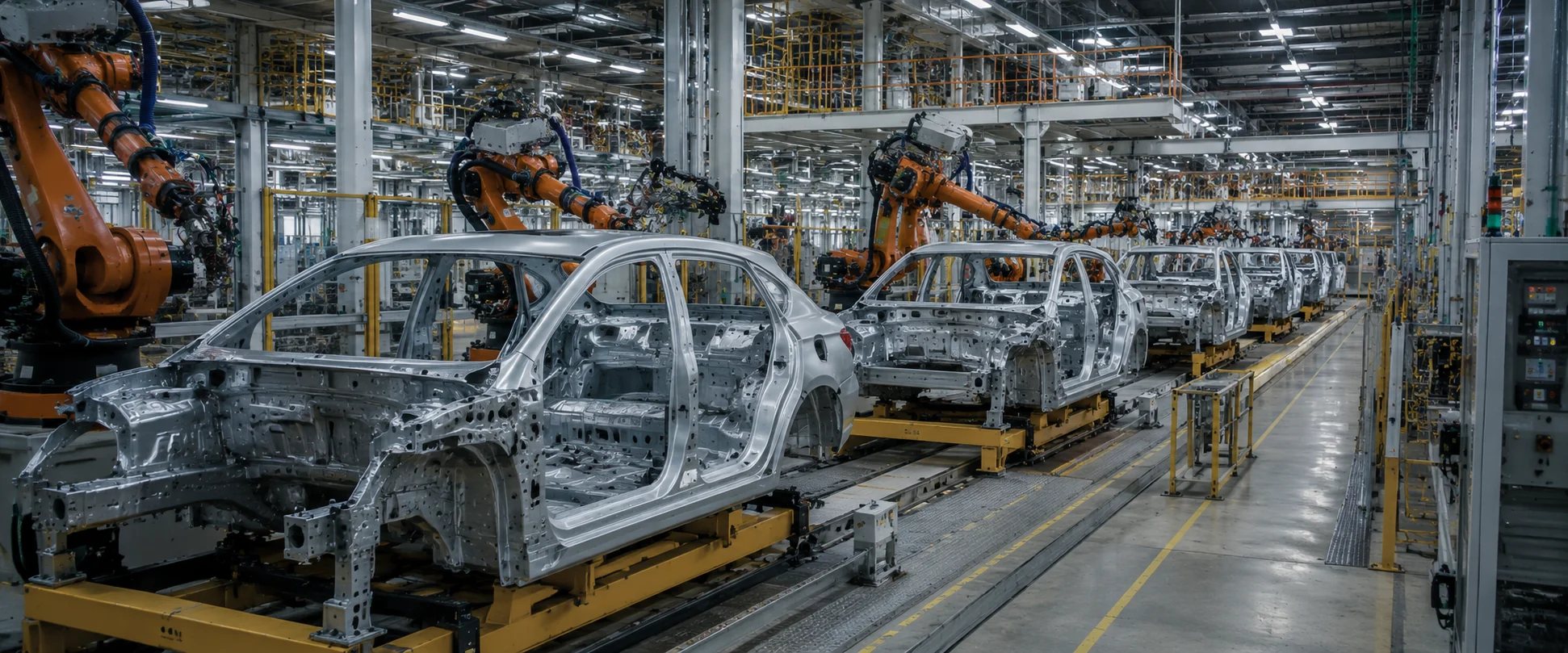
Cable assemblies for automotive and industrial vehicles
Automotive cable assemblies work in a demanding environment: continuous vibration, temperature cycles, humidity, salt and cleaning products. We serve equipment manufacturers and integrators of industrial and special vehicles who need connectors, terminals or assemblies defined by part number, interface and conditions of use.
What this industry needs
What automotive cable assemblies demand
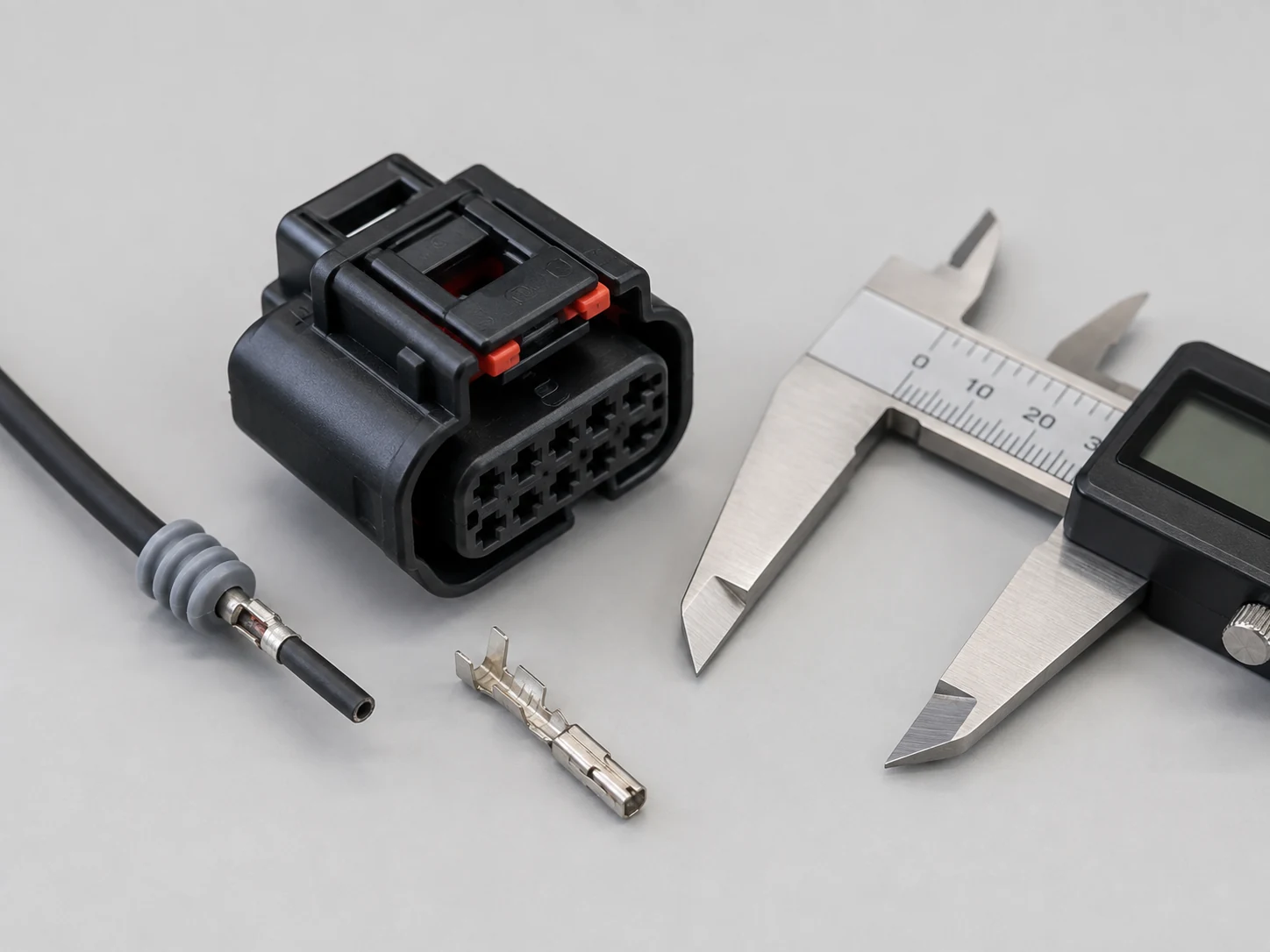
The part number does not end at the housing. An automotive connector is not chosen only by number of ways: the series, the mating interface, the terminal, the conductor, the sealing and the locking must match the configuration defined for the equipment, where they form part of the system. That a part fits mechanically is not enough by itself to establish a valid alternative.
Industry requirements
What to define in automotive cable assemblies
Each project can require different criteria and they are confirmed with your documentation before quoting. The environmental conditions of the assembly depend on its location and use in the vehicle: if the project defines requirements derived from ISO 16750 —environmental conditions and testing for electrical equipment in road vehicles— or another manufacturer specification, they are built into the selection of the assembly and of the manufacturer.
Common applications
Where we are consulted about automotive cable assemblies
We work mostly on equipment fit-out, adaptation and short runs, not on vehicle-manufacturer line volume.
On-board equipment
Connection of equipment added to the vehicle: lighting, sensors, telemetry or auxiliary instrumentation.
Industrial and special vehicles
Connection of equipment integrated in a professional, industrial or special vehicle, according to the architecture and interface defined by the customer.
Adaptation assemblies
Harnesses and leads defined to integrate a piece of equipment through a specific interface and, where the architecture allows, avoid unnecessary changes to the original harness.
Connector identification and replacement
We narrow down the family from the part number, clear photographs, the number of ways, dimensions or a physical sample. Later replacement depends on the availability of that part number at any given time.
The connection system
What to confirm in automotive cable assemblies
An automotive connection is not defined by the housing alone. Interface, terminal, conductor, sealing and locking must match the configuration required for the equipment, where applicable.
Housing and interface
The series, number of ways, polarisation and mating part must match the interface defined for the equipment. A visually similar housing does not by itself establish a valid alternative.
Terminal and conductor
The terminal or contact must match the connection system and the cross-section and characteristics of the conductor defined for the project. Where applicable, the diameter over insulation and compatibility with the seal must also be considered.
Sealing and locking
Seals, cavity plugs and secondary locks must form part of the configuration when the system requires them. Their presence in a component does not by itself determine the protection of the equipment or the final vehicle.
How we work for this industry
How we identify and supply automotive cable assemblies
Many automotive enquiries start with a photo of a connector without a legible part number.
You send us the sample or the photo
A clear photograph of the connector and its contact can be a good starting point to narrow down the family. The part number if legible, the number of ways, some dimension or a physical sample improve confidence in the identification.
We compare series and part number
We compare the available information with candidate part numbers and configurations: series, number of ways, type of sealing and contact. When the identification can be closed with sufficient evidence, the part number is used as the basis for preparing the quote; when not, we tell you which data is missing.
We quote the complete pair
We include the connector, contacts and accessories needed: a connector without its correct terminals solves nothing.
Supply and repeat orders
The agreed part number is recorded as a procurement reference. Future availability depends on the status of the manufacturer and the part number at that time; if a potentially compatible alternative appears, we compare the differences and the customer validates the change before incorporating it into the equipment or vehicle.
Do you have an unidentified connector?
Do you need to identify an automotive connector?
Send us the part number if it exists, clear photographs, the number of ways and, where possible, dimensions or a sample. With that information we can narrow down the family and compare possible part numbers before quoting. If the outcome is a potentially compatible alternative, we tell you the differences and you validate the change before buying. If you want to prepare your enquiry, in how to request a quote we explain what information is needed.
What you can send us
Tell us what you need to buy
We reply in writing with what we have been able to confirm.